The Garden
A living landscape shaped over generations and rooted in Sri Lanka’s forest garden tradition. Rare to this region, it holds a rich diversity of plants within a self-sustaining perennial system that provides food, shade, and life throughout the year.
The Garden
is the heart of Luminosium.
A private forest garden, shaped as a living Elysium designed to help you slow down, reconnect, and feel clear again
Kandyan home gardens are among Sri Lanka’s most resilient living systems. Layered, diverse, and deeply integrated with daily life. They are considered multifunctional, delivering ecological, economic, social, and cultural benefits while supporting food security, biodiversity, environmental sustainability, and human well-being. Over generations, they have provided nourishment, income, climate balance, and a quiet sense of security, functioning like small, self-sustaining forests.
This garden continues that legacy, evolving across generations through care and refinement. Now, in its third generation, it takes a further step, introducing aesthetic, emotional, and healing experience as a designed function.
The landscape is shaped not only to produce, but to be felt. Inspired by Sri Lankan poetry and cultural memory, form, rhythm, water, and light are composed with intention, creating a space where the body slows, the mind settles, and connection begins to return.
A garden in continuous evolution, inviting you to step in, slow down, and discover what begins to change.
More Than
A Garden
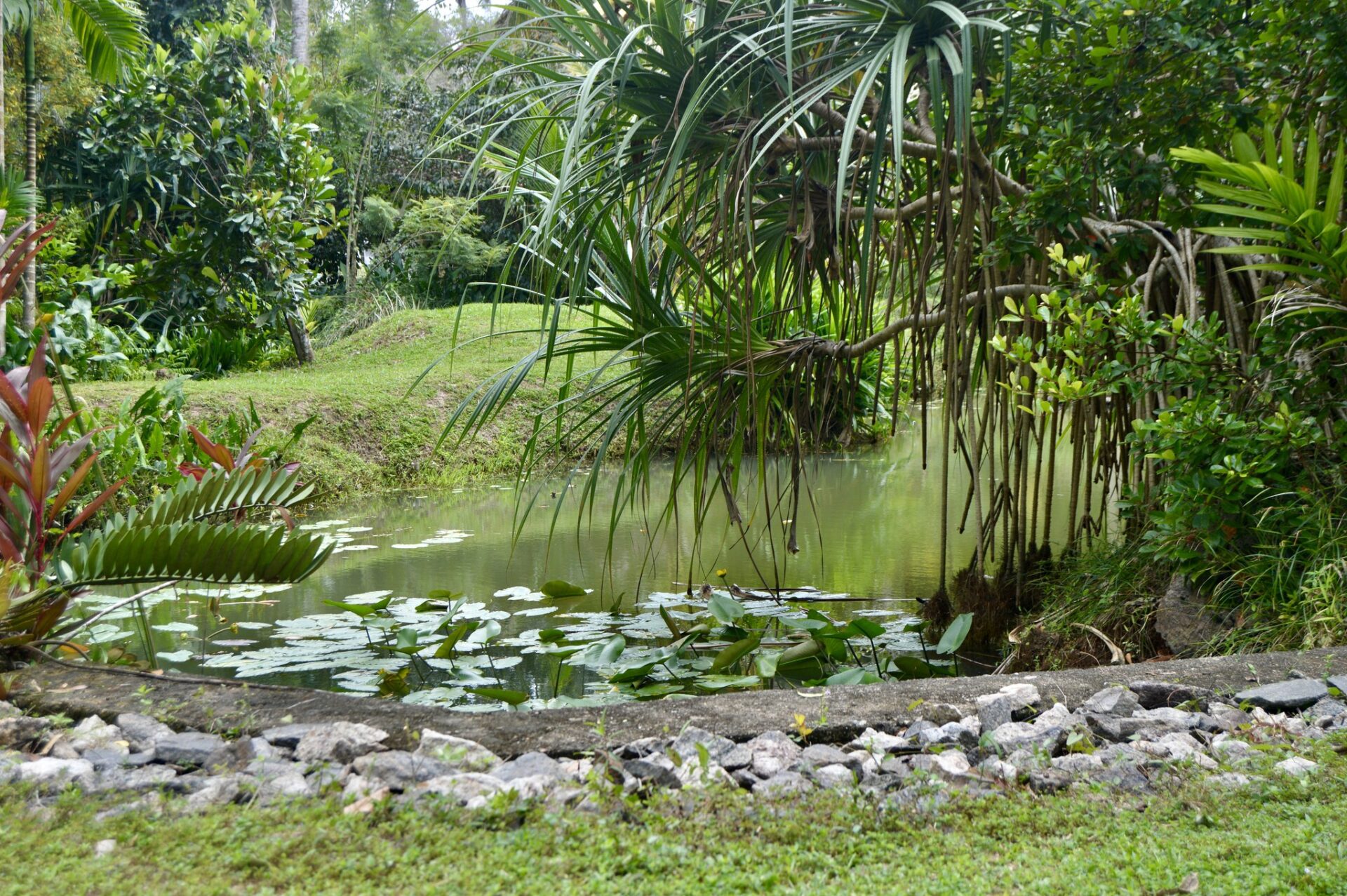
Danansooriya Home Gardens is not a landscaped garden designed simply to be admired. It is a living ecosystem where food, water, biodiversity, wildlife, beauty, and human wellbeing coexist in a dynamic and interconnected landscape.
Shaped by generations of stewardship, the garden reflects a philosophy of working with nature rather than against it. Every pond, tree, plant, and habitat contributes to a larger living system that continues to evolve, regenerate, and support life.
More than a garden, it is a place where people can experience the relationship between nature, culture, and wellbeing.
Microclimate, Climate Resilience
and Food Security
One of the most remarkable outcomes of the garden’s evolution is the microclimate that has developed over time. The combination of mature tree canopy, layered vegetation, ponds, wetlands, and living soils creates an environment that is often noticeably cooler than surrounding built-up areas.
This natural cooling effect helps moderate heat, retain moisture, support wildlife, and create more comfortable conditions for both people and plants. Guests frequently experience the difference as they move from nearby roads and towns into the garden’s shaded and biodiverse landscape.
Beyond comfort, these systems contribute to long-term resilience. The diversity of perennial crops, food-producing trees, spices, rice fields, aquatic ecosystems, and wildlife habitats reduces dependence on any single species while strengthening the garden’s ability to adapt to changing climatic conditions.
As temperatures rise and weather patterns become increasingly unpredictable, landscapes such as these demonstrate how biodiversity, food production, water, and human wellbeing can be integrated into a living system that is both productive and resilient.
A Living Collection
Of Tropical Diversity
One of the most remarkable qualities of the garden is its diversity.
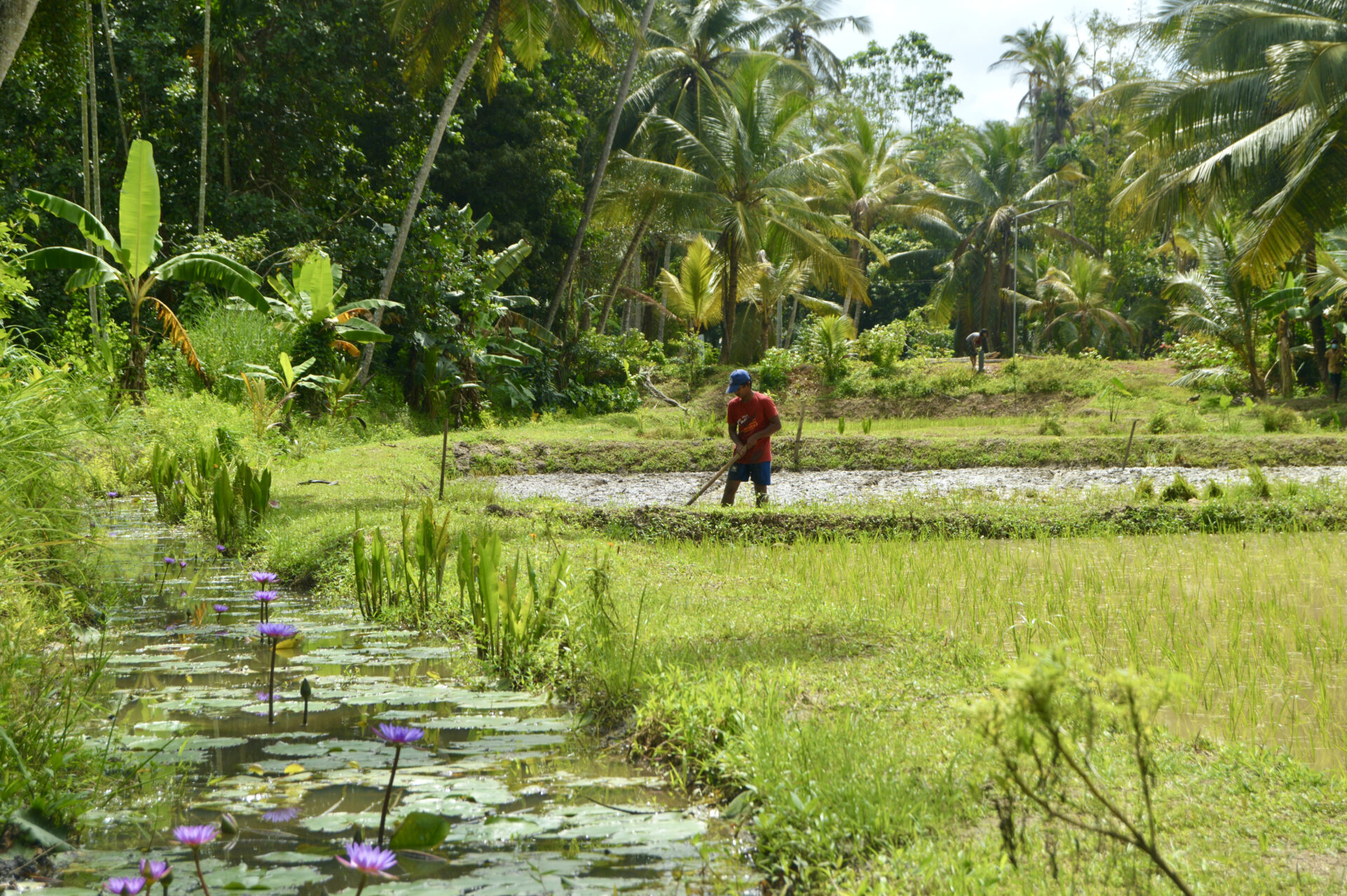
Bringing together the principles of Kandyan Home Gardens, Forest Gardening, Agroforestry, Permaculture, Biodiversity Conservation, and Human Wellbeing, the landscape supports an extraordinary variety of fruits, spices, medicinal plants, rice fields, aquatic ecosystems, ornamental species, timber trees, and wildlife habitats within a single living ecosystem.
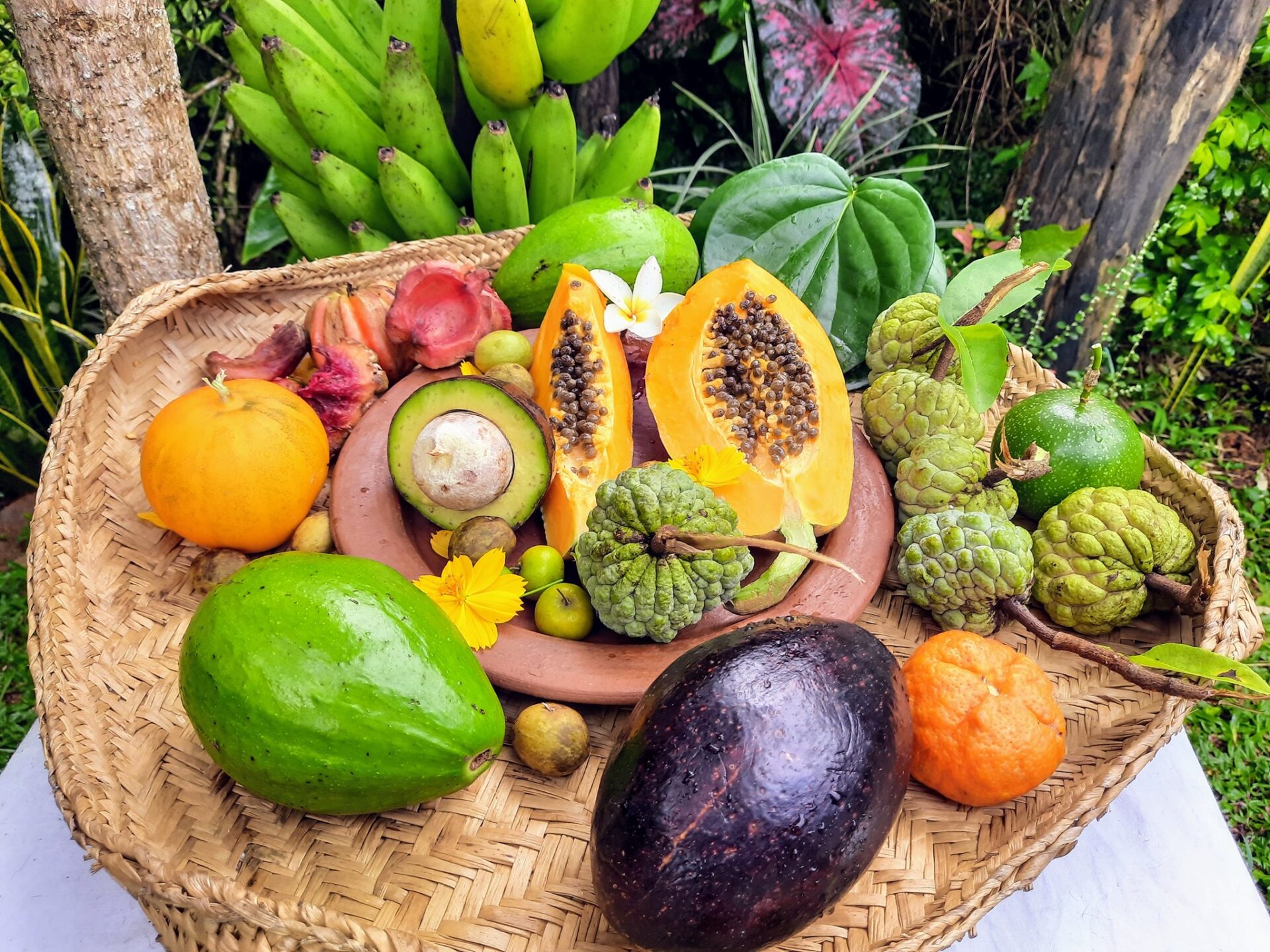
Mango, banana, citrus, avocado, mangosteen, jackfruit, breadfruit, coconut, coffee, cocoa, pineapple, rice, cinnamon, pepper, cardamom, cloves, and many other species grow together in layered relationships that have evolved over generations. Most are perennial plants that continue to mature, produce, and enrich the landscape year after year.
What makes this landscape truly special is not any individual species, but the way so many different forms of life coexist within a single place. Few landscapes bring together the traditions of Kandyan Home Gardens, Forest Gardening, Agroforestry, Permaculture, productive agriculture, biodiversity habitats, and human wellbeing in such an integrated and living form.
Rather than focusing on a single crop or purpose, the garden celebrates diversity itself demonstrating how abundance, beauty, resilience, and wellbeing can emerge when many forms of life grow together in harmony.
Danansooriya Home Gardens
Where Biodiversity, Heritage, and Human Wellbeing Grow Together
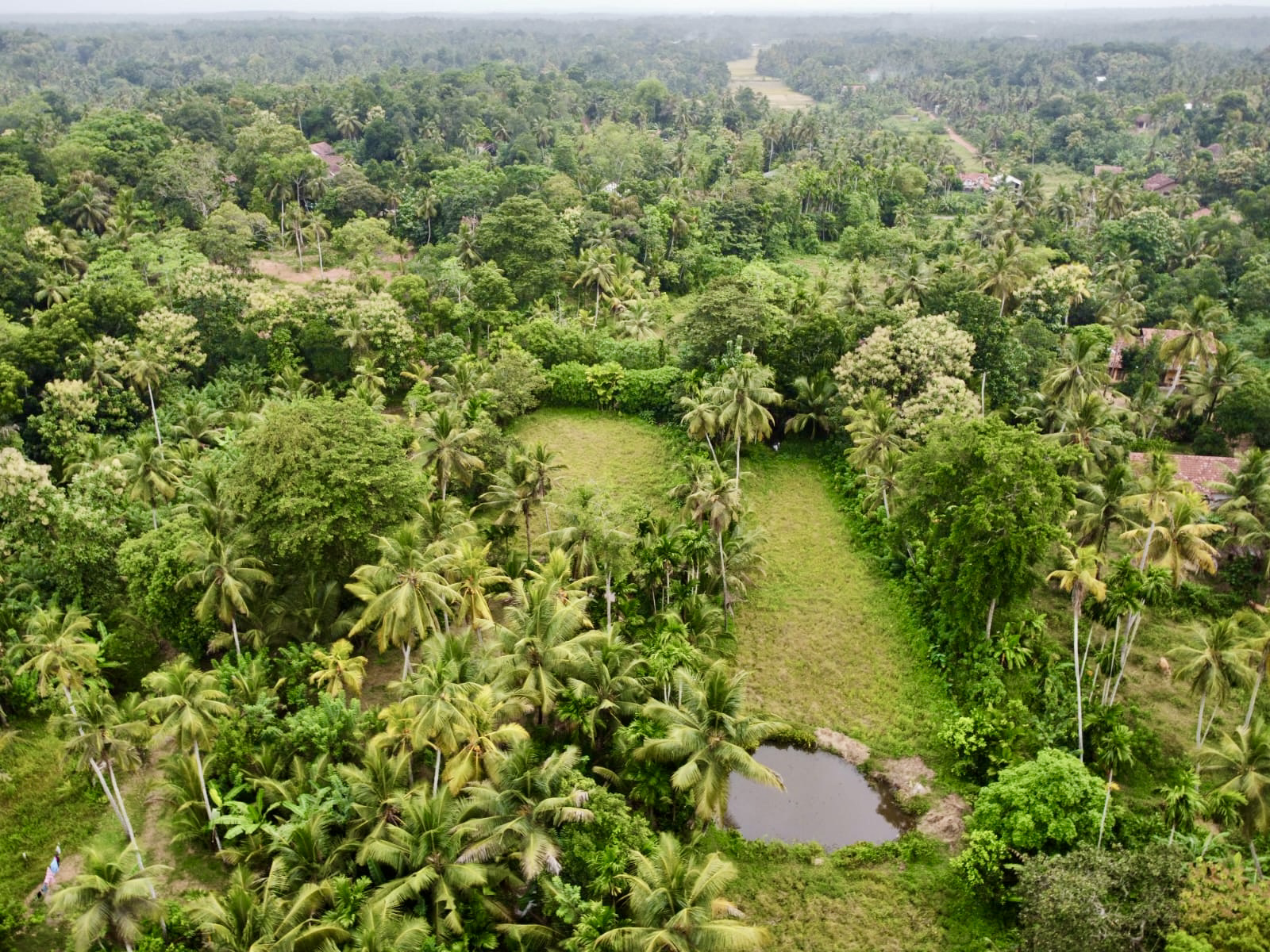
Hidden within Sri Lanka’s tropical landscape, Danansooriya Home Gardens is a living forest garden nurtured over generations. Inspired by the wisdom of Kandyan Home Gardens and enriched by the principles of Agroforestry, Forest Gardening, and Permaculture, it is a place where nature is not managed as a collection of plants, but cultivated as a living ecosystem.
Across twelve acres of ponds, trees, wildlife, and productive landscapes, the garden invites visitors to experience a different relationship with nature. One based on stewardship, abundance, beauty, and connection.
This is not simply a garden to admire. It is a living landscape to experience.
Landscape for
Aesthetic Healing
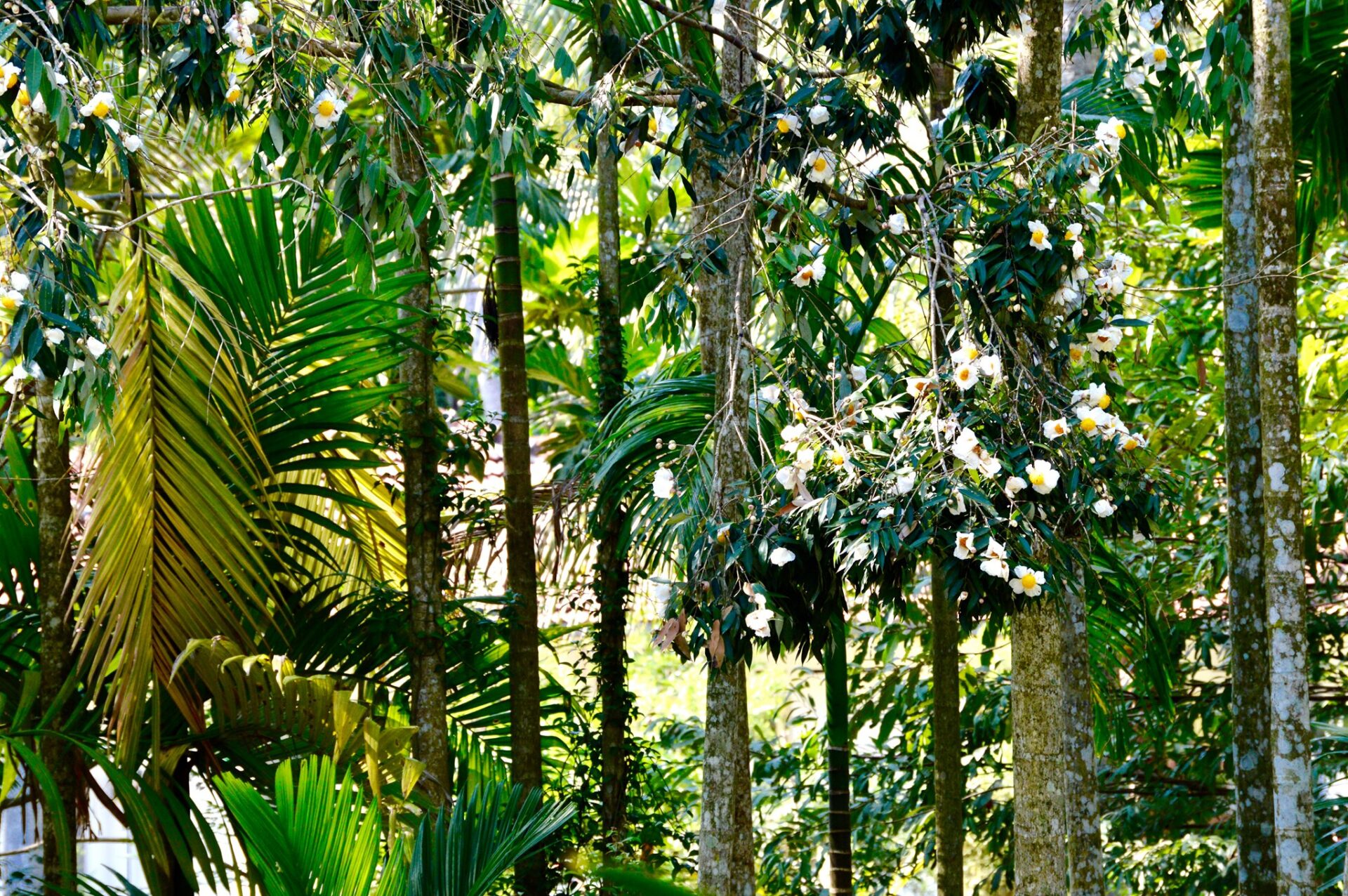
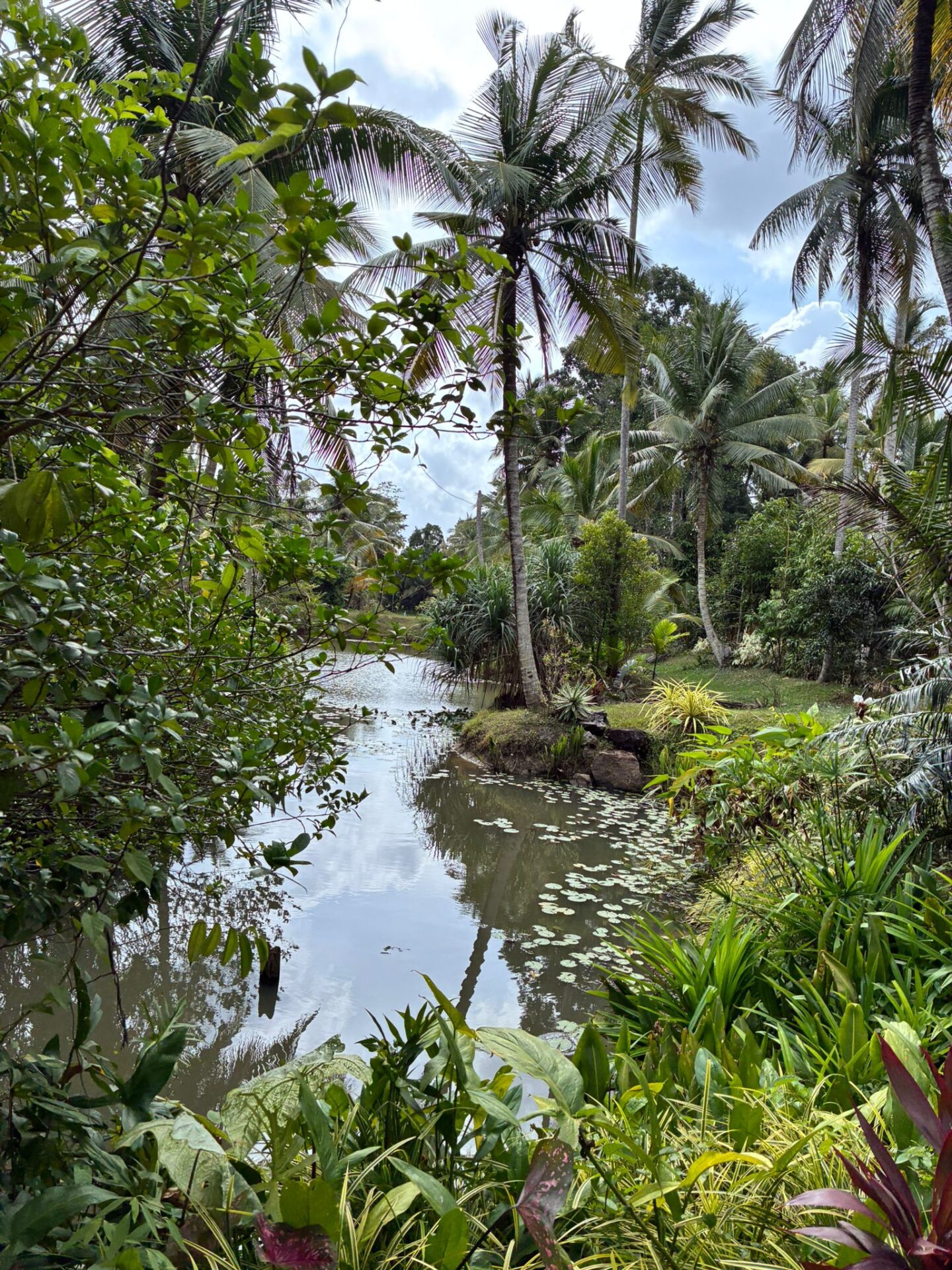
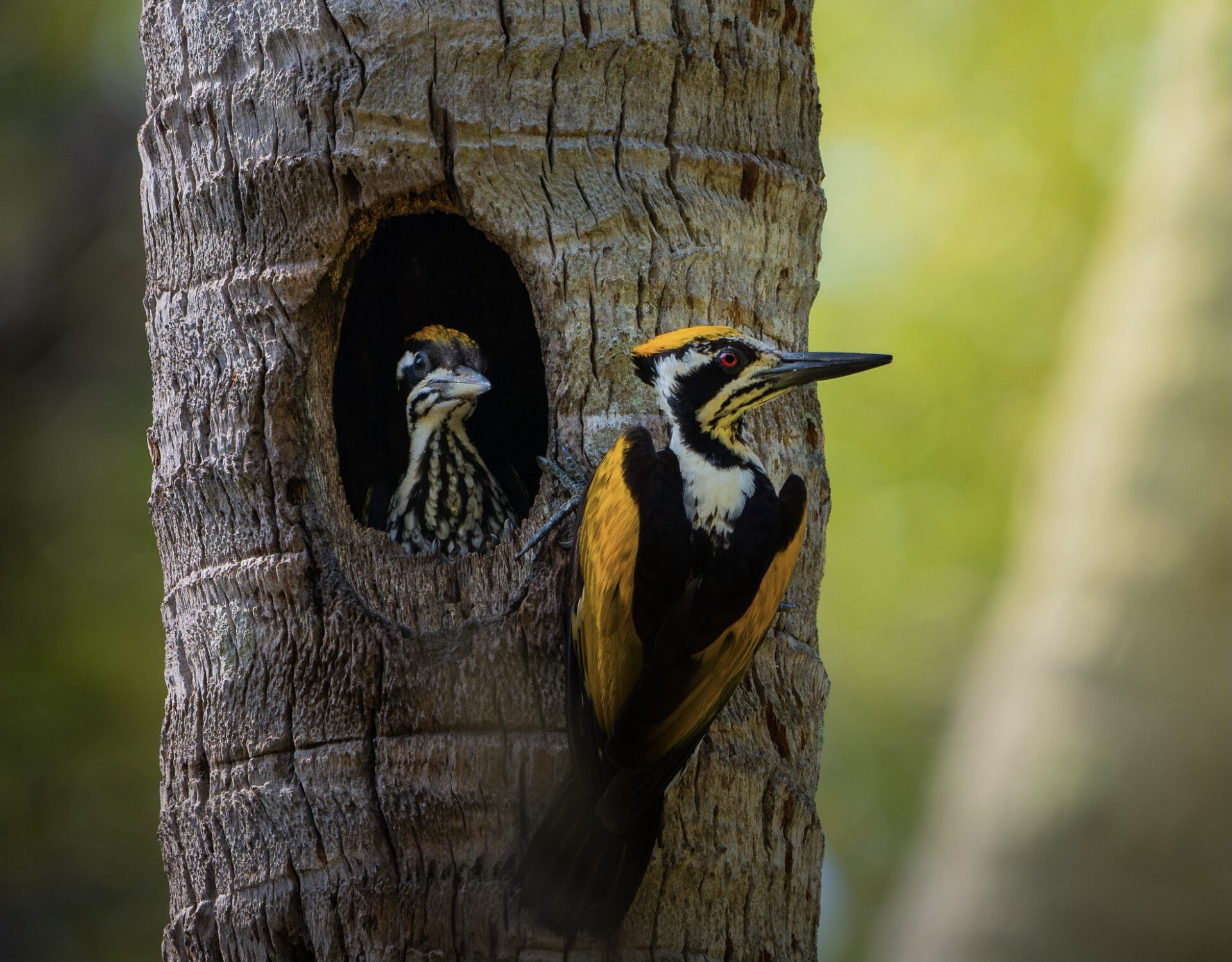
The landscape at garden is shaped not only to function, but to gently restore. Paths, water, and layered planting follow natural patterns, guiding the flow of space, light, and air in a way the body recognises without effort. Light filters through leaves, air moves softly through the canopy, and spaces open and close in quiet rhythm. Seasonal flowering, vibrant tropical leaves, and fruiting plants are carefully introduced to engage the senses, from colour and scent to taste and sound. Birds find refuge in quiet corners, water invites them to gather, and the presence of bees, butterflies, bats, and birds brings the garden to life. Within this living balance, the senses soften, the mind slows, and a deeper sense of calm and clarity begins to unfold naturally.
Water Life &
the Ellanga System
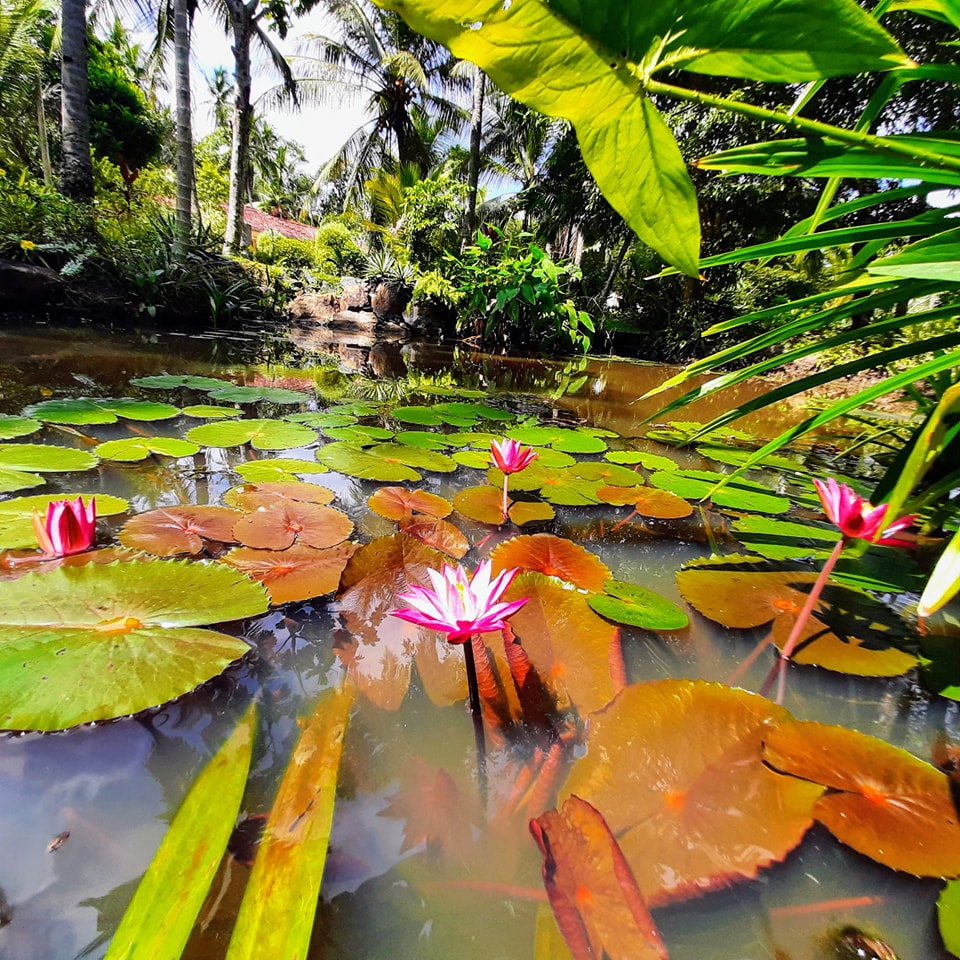
Water at Garden is not supplied, but guided. Inspired by Sri Lanka’s traditional Ellanga cascade systems, the landscape is shaped to receive, store, and circulate rainwater naturally across the garden. Rooted in an ancient agroforestry home garden model, this landscape has evolved into a regenerative and sustainable system for today. In traditional drought management, landscapes themselves are the foundation, and home gardens are designed to complement the larger Ellanga ecosystem. Set at the margin of the wet zone, plant growth here is naturally vigorous, and the perennial system supports continuous regeneration throughout the year. Ponds, soil, and layered vegetation work together to retain moisture, cool the air, and sustain life through changing seasons. This quiet movement of water brings a lasting sense of freshness and calm, restoring balance to both the land and those within it.
The Kandyan Home Garden Tradition
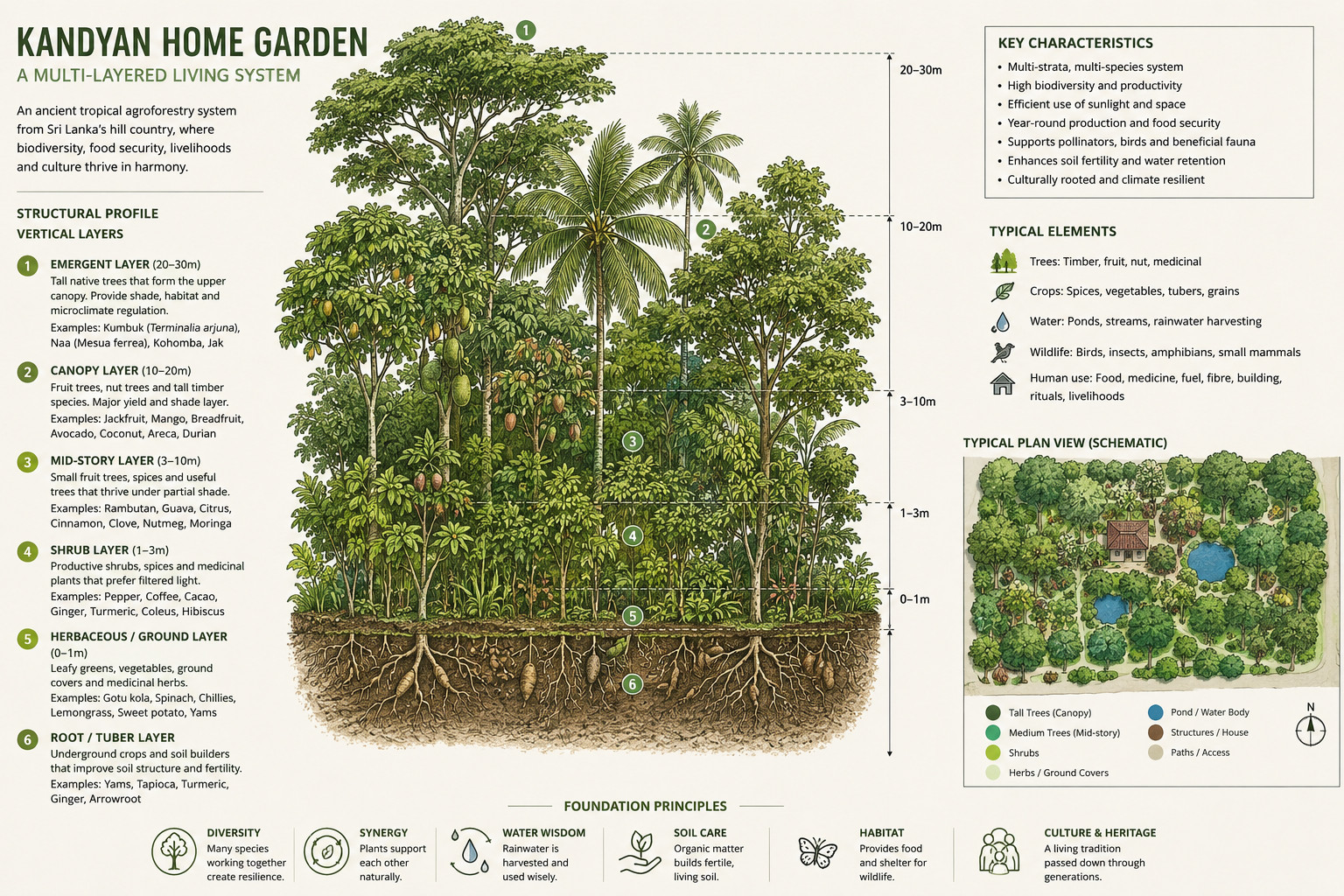
Long before concepts such as sustainability, biodiversity, regenerative agriculture, and agroforestry became widely discussed, generations of Sri Lankan families had already developed a sophisticated way of living with nature through the Kandyan Home Garden tradition.
Recognised as one of the world’s most diverse and resilient traditional land-use systems, Kandyan Home Gardens are carefully layered landscapes where trees, fruits, spices, vegetables, medicinal plants, water, wildlife, and people coexist within a single living ecosystem. Rather than separating production from nature, the system integrates them, creating environments that are productive, beautiful, and ecologically balanced.
For centuries, these gardens have provided food, medicine, shade, building materials, biodiversity, and livelihoods while maintaining healthy soils, protecting water resources, and supporting wildlife. Their strength lies not in any individual species, but in the relationships that exist between hundreds of plants, animals, insects, microorganisms, and people.
Danansooriya Home Gardens draws inspiration from this tradition. While evolving to meet contemporary needs and incorporating principles of Forest Gardening, Agroforestry, and Permaculture, the garden remains rooted in the Kandyan philosophy that human wellbeing and ecological wellbeing are inseparable.
Today, visitors can experience a living landscape where traditional wisdom and modern ecological understanding continue to grow together, demonstrating how people and nature can thrive in harmony.
A Living
Forest Garden
Agroforestry
in Practice
Agroforestry integrates trees, crops, and natural ecosystems into a single productive landscape. Rather than separating agriculture from nature, it brings them together.
Across the garden, fruit trees, spices, medicinal plants, timber species, and food crops grow in layered relationships that make efficient use of sunlight, water, soil, and space.
This approach increases productivity while reducing dependence on external inputs, demonstrating how healthy ecosystems can also provide food, livelihoods, and long-term resilience.
The Seasonal
Fruits
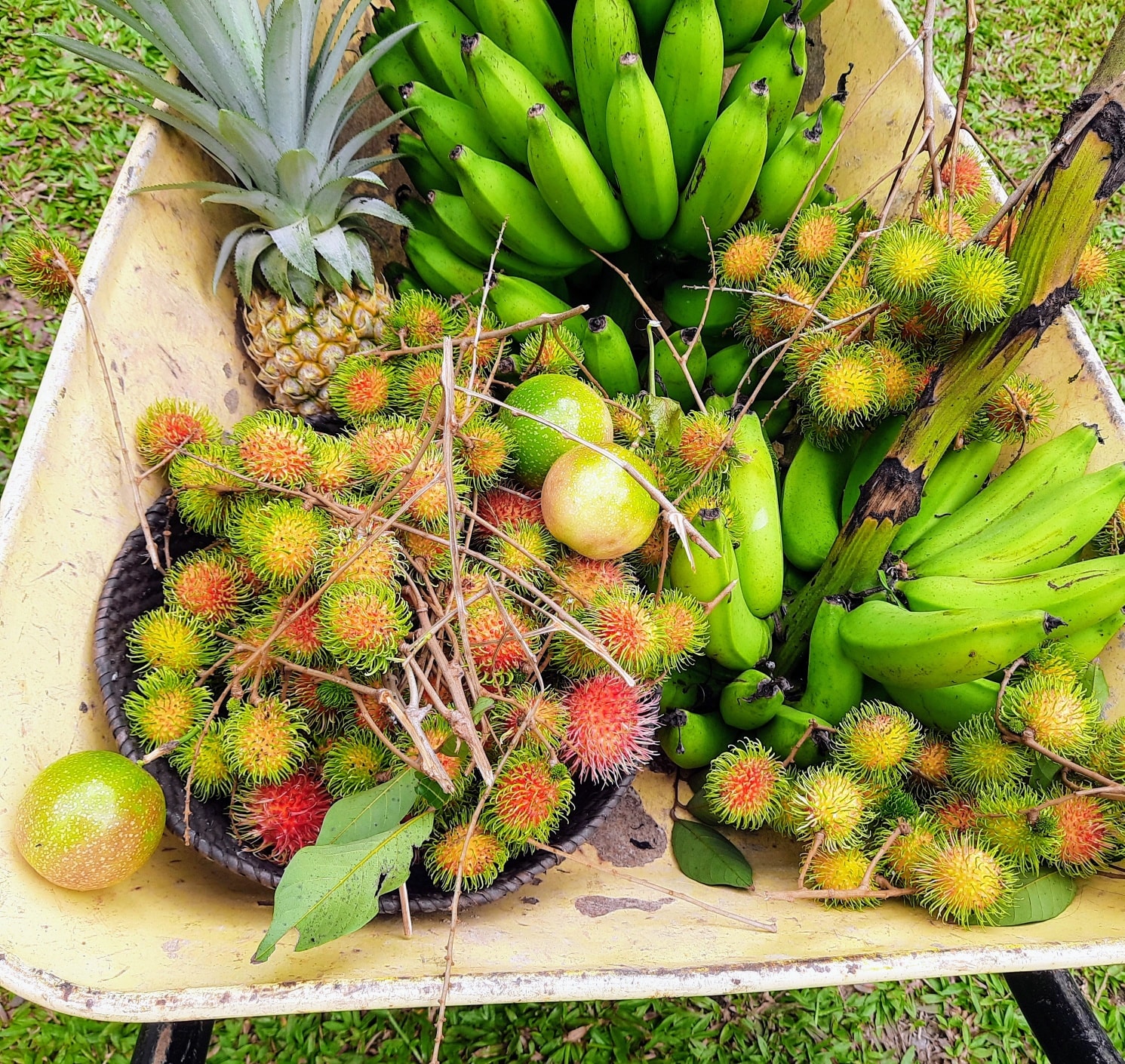
Fruits are not produced on demand, but arrive with the seasons. From coconut, mango, mangosteen, eggfruit, avacado, papaya and rambutan to banana, orange, starfruit, jackfruit, breadfruit, wood apple, soursop, and cashew, each fruit ripens in its own time, shaped by sun, rain, and soil. This natural rhythm creates a quiet sense of abundance, where what is available is always fresh, local, and alive with flavour. More than something to eat, it is part of the experience, offering a simple and grounded connection to the garden and the moment you are in.
Sensory & Herbal
Experience
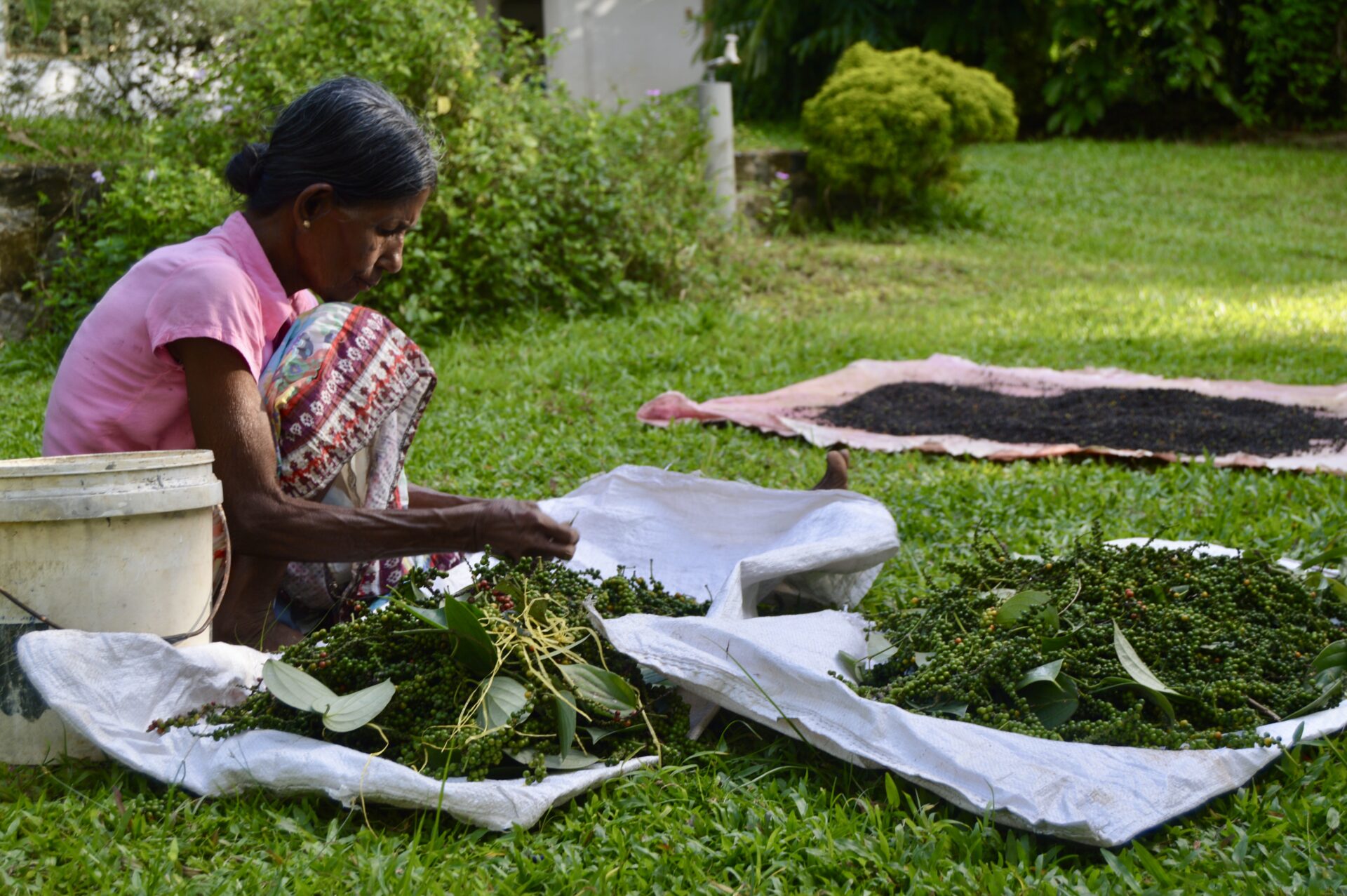
The scent of curry leaves, pandan, lemongrass, cinnamon, cardamom, and wet earth rises naturally in the air, while plants such as aloe vera, ginger, turmeric, venivel, and soap ginger reflect a deeper, more natural way of cleansing and care. Garden greens such as gotukola, mugunu enna, gira pala, gonika, miyenadalu, kohila, and aguna kola grow as part of everyday life, connecting nourishment with the land. Pepper vines, garcinia, and other plants weave through the space, creating a living system of flavour, scent, and texture. Leaves can be touched, aromas linger as you move, and each plant carries its own presence, allowing the body to reconnect with simple natural rhythms and a grounded state of being.
Permaculture
Principles
Permaculture is a design approach that seeks to work with nature rather than against it. By observing natural patterns and relationships, it aims to create systems that are efficient, productive, and sustainable over the long term.
Many elements throughout the garden reflect permaculture thinking, where plants, water, wildlife, and people are considered part of an interconnected whole. The emphasis is not on controlling nature, but on designing landscapes that allow natural processes to flourish.

Aesthetic Healing
Agriculture
Agriculture in the garden is not treated as production alone, but as a living art form shaped for beauty, balance, and healing.
This landscape is intentionally designed to go beyond conventional farming. It is a careful integration of gardening, plantation systems, and Kandyan forest agroforestry, brought together to create an environment where both humans and nature can restore themselves.
The layout of the land, the placement of water, the layering of trees, and even the seasonal colors are guided by a deeper inspiration drawn from Sri Lankan poetry, songs, and classical literature. These traditions have long celebrated harmony between people, land, and emotion. At the garden, that philosophy is translated into a physical space you can walk through, feel, and live within.
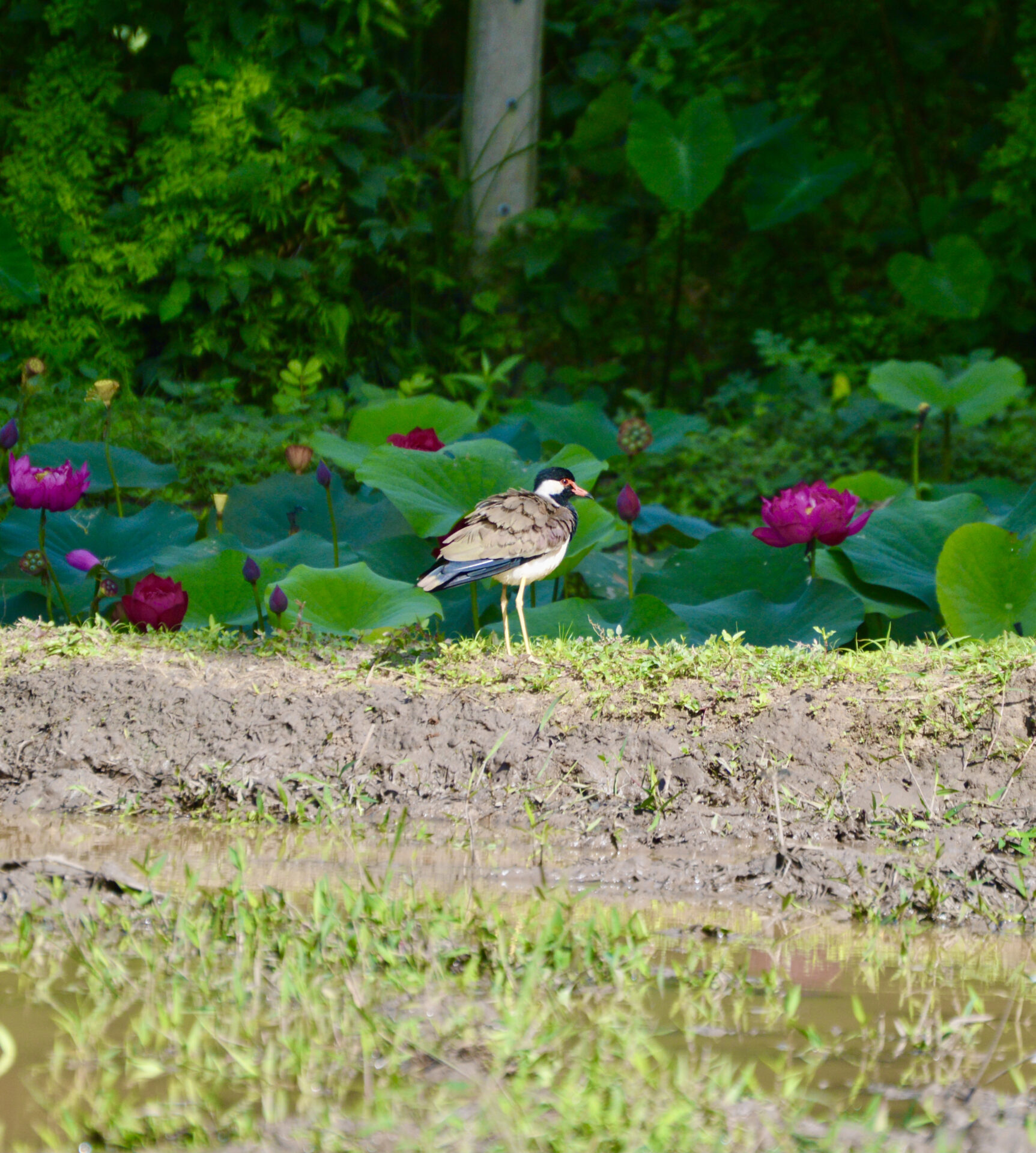
Water gardens with lotus and lilies, shaded coconut groves, rice fields, fruit-bearing trees, and naturally evolving ecosystems are not arranged for efficiency alone, but for aesthetic rhythm and sensory calm. What you experience is not a farm, but a landscape that invites stillness, curiosity, and quiet connection.
This approach creates a different kind of agriculture. One that is not driven by force, but by balance. One that values how the land feels, not just what it produces.
Here, the process of growing food, managing water, and nurturing biodiversity becomes part of a larger purpose to create a space where beauty supports healing, and agriculture becomes an experience rather than an activity.
Wildlife &
Living Biodiversity
Landscape of Transformation


The garden seen today did not emerge overnight.
Over many years, it has evolved through observation, stewardship, patience, and a commitment to working with nature. Areas that were once bare and exposed have gradually become living ecosystems rich in trees, water, biodiversity, and life.
This transformation reflects a belief that meaningful change rarely happens through force. It happens through time, care, and the creation of the right conditions for growth.
In many ways, the evolution of the landscape mirrors the purpose of Luminosium itself. Just as the garden has been restored and regenerated over time, we hope guests leave feeling more rested, connected, and renewed than when they arrived.
Transformation is not only part of the garden’s story.
It is part of the human experience it seeks to inspire.

Legacy Craft
& Evolution
The garden is shaped by generations, not built overnight. Rooted in Sri Lanka’s forest garden tradition, this land was designed for abundance, then allowed to grow, adapt, and mature over time. What you experience today is both heritage and evolution, where traditional wisdom meets a new vision of healing and sustainability. It is crafted with care, guided by nature, and continuously evolving into something deeper, more balanced, and more meaningful.
Story
Long before Luminosium, this land was a natural forest. It later became part of a large coconut estate, and for a time, even served as a World War II camp. As the region evolved, large estates were divided and sold, yet a rare portion of this land remained intact.
Ranmenika Danansooriya saw something others did not. She believed monoculture was slowly weakening the soil, water, and life itself. Instead, she imagined a different kind of garden, one that could provide food, materials, energy, and wellbeing through balance. With that vision, she began reshaping the land, restoring diversity, water, and life back into the system.
Alongside her, Peter Kahandawa shared the same spirit of building and possibility. While pursuing industrial ambitions, he continued to support the land. But shifting policies and land acquisitions disrupted their path. After years of effort and legal struggle, only a portion of the original land remained. What could have ended the vision instead carried it forward, and the first model of this agroforestry home garden became known locally as Danansooriya Home Garden.
Their son Gamini continued the journey. With land now scattered, he focused on strengthening what remained, shaping a multi-functional landscape of food, fodder, wood, herbs, fruits, and water. Yet the dry seasons revealed a deeper need, the restoration of the land itself.
The third generation took this as a turning point. The landscape was reimagined. A network of ponds restored water retention and raised the surrounding water table. Miyawaki forests accelerated regeneration. Biodiversity returned. Seasonal fruits, aquatic life, and wildlife began to thrive. Birds settled. The balance of bees, butterflies, bats, and birds emerged. The temperature softened, the air improved, and a new microclimate formed.
From this transformation, a new idea emerged, Aesthetic Healing Agriculture. The garden evolved beyond production into a space of restoration, not only for the land, but for people.
What stands today is not something built in a moment, but something grown through time, shaped by vision, challenge, and continuity. Luminosium is the living result of that journey, where a once imagined garden is now experienced in the present, quietly opening its doors to those who seek a deeper form of rest, balance, and connection with nature.
A Garden for
Human Wellbeing
Beyond its ecological value, the garden offers something increasingly rare in the modern world: space to slow down.
The combination of trees, water, birdsong, fresh air, and natural rhythms creates an environment that encourages rest, reflection, and reconnection. Whether through forest bathing, quiet walks, healthy food, meaningful conversation, or simply spending time in nature, guests are invited to experience a gentler pace of life.
For many visitors, the garden becomes more than a landscape. It becomes a place to pause, reset, and begin seeing the world differently.


The Luminosium
Vision
Danansooriya Home Gardens is the living landscape.
Luminosium is the human experience that emerges from spending time within it.
While the garden provides the setting, Luminosium represents something deeper: a state of presence, restoration, and connection inspired by nature, place, and meaningful hospitality.
Together, they reflect a simple belief: when people reconnect with nature, they often reconnect with themselves.
We believe the quality of your journey is determined by the quality of your arrival, and that some of life’s most meaningful experiences begin by simply slowing down.
Looking Toward
the Future
Danansooriya Home Gardens is not a finished garden. It is a living landscape that continues to grow, evolve, and regenerate with each passing season.
Our vision is to steward this land for future generations while demonstrating how biodiversity, food production, beauty, and human wellbeing can coexist within a healthy ecosystem. Through conservation, regenerative practices, and the sharing of knowledge, we hope to inspire a deeper appreciation for the relationship between people and nature.
As the garden continues to mature, Luminosium will continue to grow as a place where travellers can reconnect with nature, experience authentic Sri Lankan hospitality, and discover a slower, more meaningful way of living.
The future we envision is simple: a thriving landscape, enriched biodiversity, and generations of guests who leave feeling more connected to themselves, to others, and to the living world around them.

From Garden to
Table
We believe that wellness extends to what you consume, and we are proud to offer an authentic “garden to table” experience. The botanical richness of our forest garden directly enhances your stay. We harvest edible flowers to brew soothing, fresh herbal teas, and we gather fresh tropical fruits and spices from our own land to share with our guests. You are experiencing food directly from nature, not from a supermarket, reinforcing the deep authenticity of your Sri Lankan forest garden living experience.